
Aircraft Noise - Can The Noise Be Reduced In The Future?

The noise produced by aeroplanes is rather extortionate – leading to outrage by those who live near busy airports. The plans for expansion at the famous Heathrow Airport have been discouraged due to the amount of noise pollution that will be produced.

It is quite clear that today’s aircraft manufacturers have fabulous future opportunities to create and market new product designs. Future prospects that manufacturers have to consider are:
v The escalating fuel costs.
v The rising demand of aircrafts.
v The need for more quiet aircrafts.
v The desire for environmentally friend aircrafts.
They are just some of the possibilities of the future of aircrafts. From a quick scan of the scientific literature, press releases and the internet, it has been revealed that there are numerous ideas and plans for future new aircrafts and associated technology.
Obviously, the idea of such developments is exciting, especially from an environmentalists point of view because these new aircrafts are expected to deliver significant reductions in fuel consumption and noise emissions.
The question is whether any of these ideas or future prospects can be ever turned from a fast growing dream into a worldwide reality.
The Technology Available
It is believed that many of the technologies that can help reduce aircraft noise pollution is already with us today. Meaning, the chances of reducing the noise pollution in the near future is highly unlikely – however it is not impossible.
Although we may not have the technology with us today, it does not mean that it cannot be developed in the future. Aircrafts have developed hugely over the years compared to the first aircrafts invented and used – this leaves us with high hopes that a more economic aeroplane will be developed in the future.
The History of Aircraft Noise
Over the last 50 years, there has been a massive reduction in the amount of noise created from aircrafts. We saw the biggest drop between the years of 1955-1980, during this time there was the development of the 1st generation turbofans to 2nd generation turbofans.
Since 1980, we have seen a steadier drop in the amount of noise pollution. Further developments of the second (current) generation of aircraft have been to take on the overall design of the craft, rather than specifically the noise created from turbofans.
The Future Plans for Aircrafts
Boeing Phantom Works has already started flying a scaled model of their Blended Wing Body (BWB) while Airbus has experimented with a redesigned Airbus A300 flying on hydrogen.
A milestone flight in aviation history also took place during May 2013 as an aeroplane powered by solar energy landed in Phoenix following a flight from California. It is not expected that solar power planes will cut fuel consumption out completely – however it is thought that it will lead to a huge change in how economical they are.
The future plans for aircrafts are limitless – as the technology develops faster than ever, we are expecting to see aeroplanes become cleaner and greener whilst offering passengers an unbeatable experience.
G&O Springs produces stainless steel springs for aircrafts and therefore finds the concept of space travel extremely interesting.
Photo Credit: Jan de Graaf
Tags: aircraft, Can, future, Noise, Reduced
Relevant Articles
 Airbus - A380 Emirates
 Sziget festival in Hungary
 The Bloop and Other Noises
 Multiple Uses of Mortal Window P...
 NYE Wedding? 4 Top Tips For The ...
 Crazy animals
 Tour Through The Star Trek Futur...
 What to Look for When Choosing B...
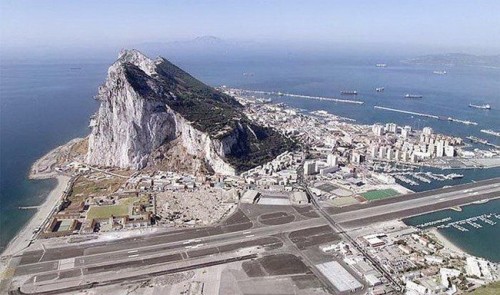
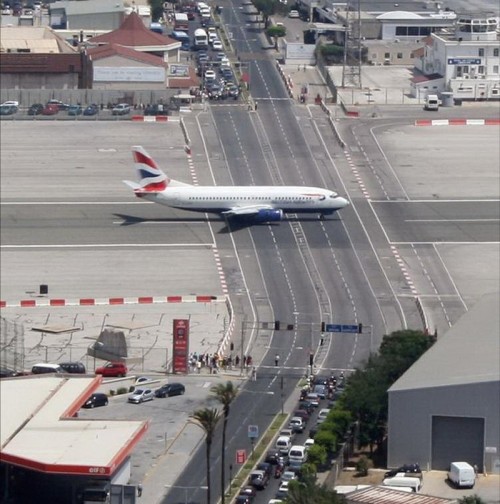
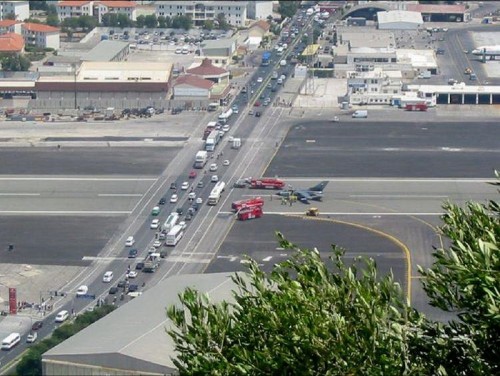
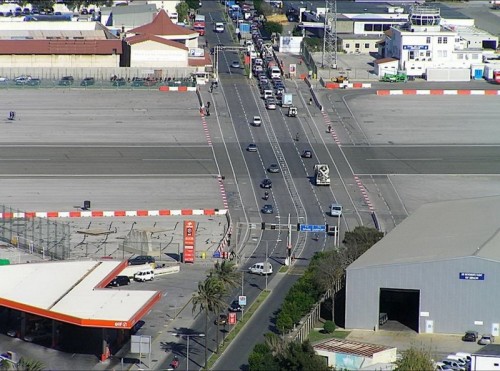
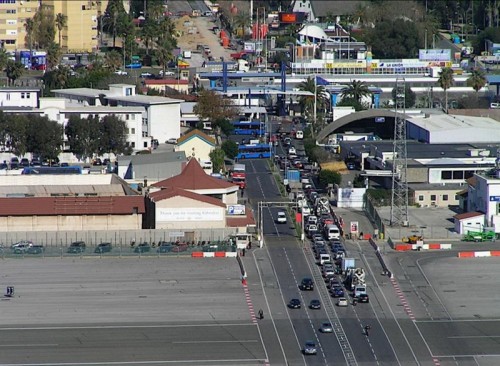
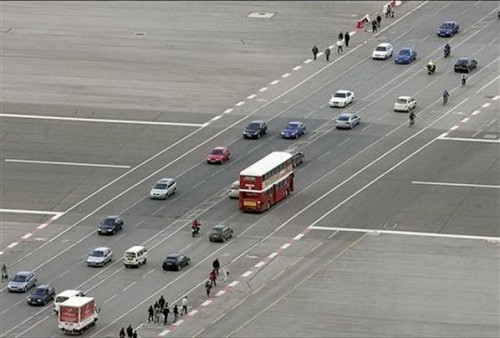
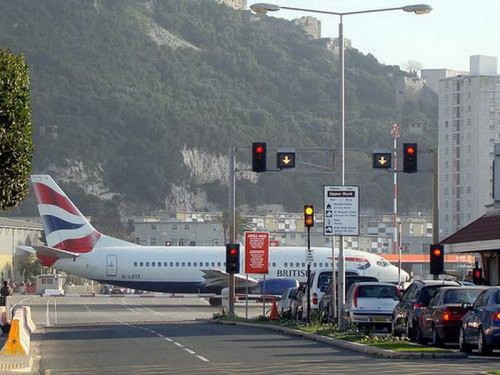
Airport in Gibraltar
This airport is interesting because of the fact that its runway intersects road into Spain. When aircraft taxis to the runway, highway from both sides overlaps by barriers, stopping the flow of transport. Gibraltar Airport is the civilian airport that serves the British Overseas Territory of Gibraltar on the Iberian Peninsula. It is owned by the Ministry of Defense for use by the Royal Air Force as RAF Gibraltar. Civilian operators use the airport; currently the only scheduled flights operate to the United Kingdom and Spain. Passengers depart and arrive through the civilian operated terminal.



Tags: aircraft, airport, Gibraltar, plane, spain
Relevant Articles
 Travel Pods For The iPod Generat...
 5 Must See Spots In Beautiful Ba...
 TSA Found A Gun In My Bag: What ...
 Interesting Facts About Air Traf...
 Five Stupid Mistakes A Traveling...
 La Tomatina festival in Spain
Modern aviation
Mi-24 “Hind”
Experience the full might of Soviet Union: Mi-24 “Hind” heavy attack helicopter, also known as “Aligator”. Developed in late sixties this helicopter is not only big and strong but also heavily armed and versatile. If you fancy a chopper and airplane in the same time, buy one of these: it can land as airplane.
Keep receipt though if your tires worn off.
Development
During the early 1960s, it became apparent to Soviet designer Mikhail Leont’yevich Mil that the trend towards ever-increasing battlefield mobility would result in the creation of flying infantry fighting vehicles, which could be used to perform both fire support and infantry transport missions. The first expression of this concept was a mock-up unveiled in 1966 in the experimental shop of the Ministry of Aircraft’s factory number 329 where Mil was head designer. The mock-up designated V-24 was based on another project, the V-22 utility helicopter, which itself never flew. The V-24 was similar in layout and configuration to the UH-1A Huey, with a central infantry compartment that could hold eight troops sitting back to back, and a set of small wings positioned to the top rear of the passenger cabin, capable of holding up to six missiles or rockets, with a twin-barreled GSh-23L cannon fixed to the landing skid.
Mil proposed the design to the heads of the Soviet armed forces, and while he had the support of a number of strategists in the armed forces, he was opposed by several more senior members of the armed forces who believed that conventional weapons were a better use of resources. Despite the opposition, Mil managed to persuade the defence minister’s first deputy, Marshal Andrey A. Grechko, to convene an expert panel to look into the matter. While the panel’s opinions were mixed, supporters of the project eventually held sway, and a request for design proposals for a battlefield support helicopter was issued.
Mil engineers prepared two basic designs: a 7-ton single-engine design and a 10.5-ton twin-engine design, both based on the 1,700 hp Izotov TV3-177A turboshaft. Later, three complete mock-ups were produced, along with five cockpit mock-ups to allow the pilot and weapon station operator positions to be fine-tuned.
The Kamov bureau suggested an army version of their Ka-25 Hormone ASW helicopter as a low-cost option. This was considered but later dropped in favor of the new Mil twin-engine design. A number of changes were made at the insistence of the military, including the replacement of the 23 mm cannon with a rapid-fire heavy machine gun mounted in a chin turret, and the use of the then-under development 9K114 Shturm (AT-6 Spiral) anti-tank missile.

Tags: air, aircraft, airplane, hind, land
Relevant Articles
 How Cute Little Boxer Puppies Ar...
 Saint Petersburg - now and...
 Modern Art Oil Paintings
 When A Dogs Bite Is Worse Than I...
 Top 5 Best Sports Cars for 2013
 Dubai Dinner Cruise – A new ex...
 On the Job: How Construction Wor...
 Family Photography A Gift of His...


